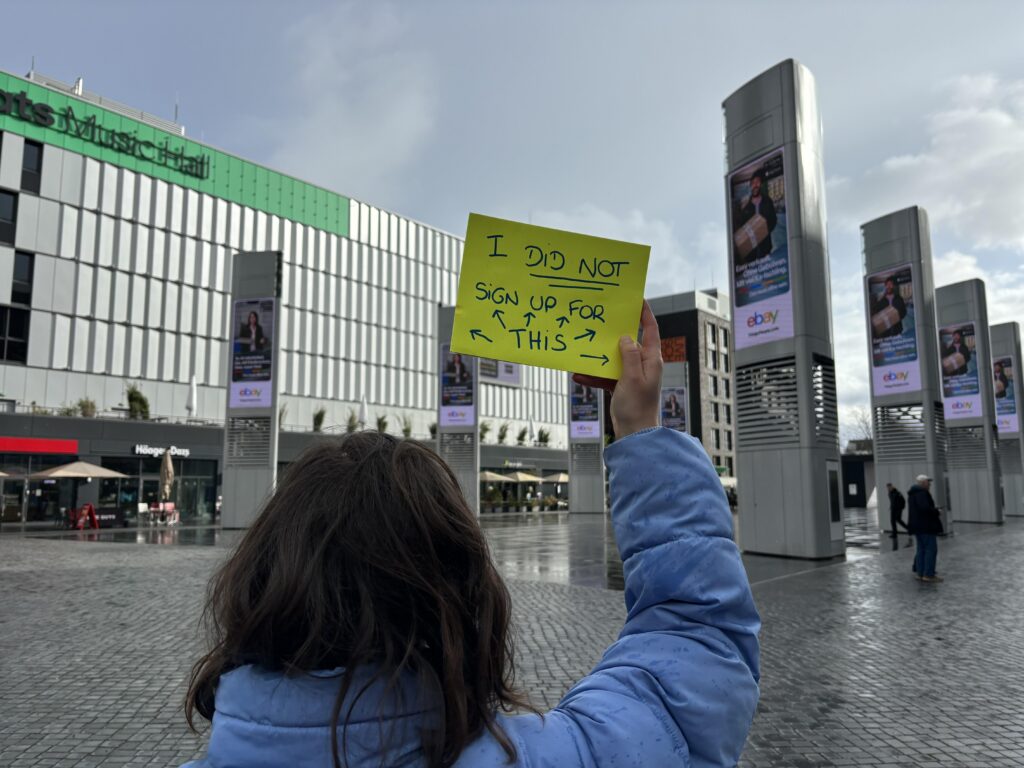
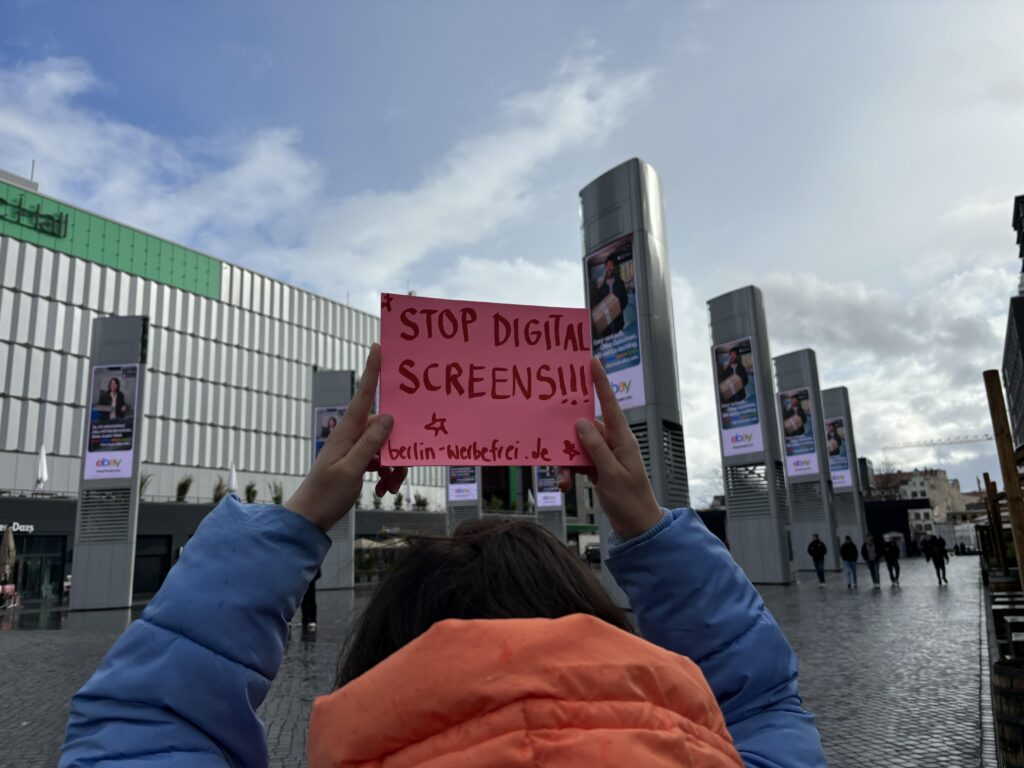
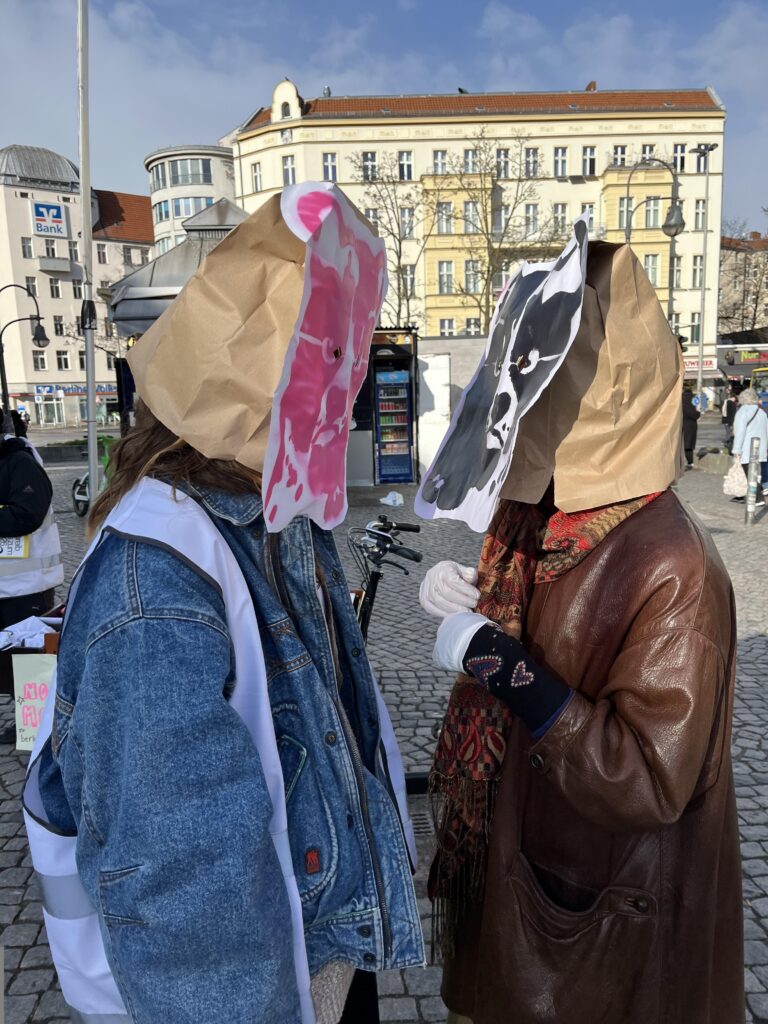
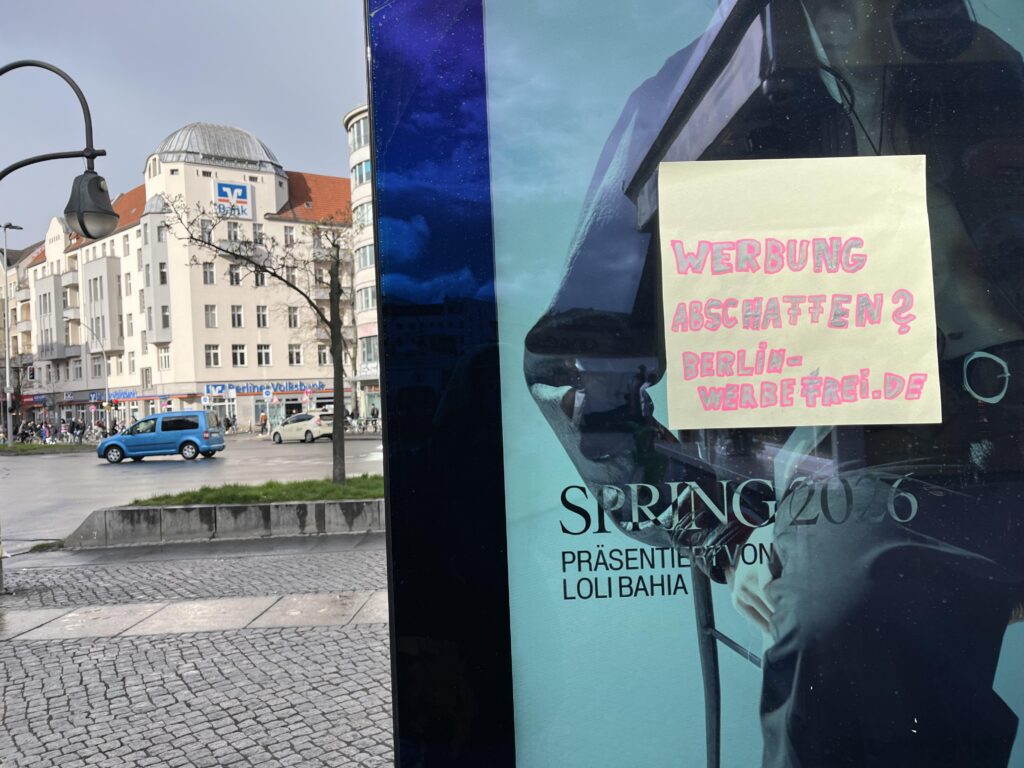
„Whose streets? Our streets!“: Under this motto, young activists from Paris and Berlin met for a week at Wannsee to discuss advertising in public spaces. After workshops and discussions at the Berlin House of Representatives, the Franco-German networking meeting culminated on Thursday, March 26, 2026, in joint interventions in public spaces. „At Hermannplatz and in front of the Arena in Friedrichshain, we covered digital advertising displays with sticky notes bearing slogans against advertising,“ admits Jerome Bàr, spokesperson for the activists. „We also drew attention to the Berlin Ad-Free Citizens‘ Initiative with a performance featuring singing and homemade masks!“
Workshops on Advertising
In the joint workshops, participants discussed the consequences of advertising. The Berlin Busters Social Club contributed a well-received workshop on racism and sexism in advertising. However, the highlight was an online workshop led by neuroscientist Dr. Mehdi Khamassi, Research Director at the Centre National de la Recherche Scientifique (CNRS) of the Sorbonne for Robotics and Neuroscience, who joined the event from Paris. Dr. Khamassi explained: “Advertisements show moving images with high brightness: they are designed to automatically capture our attention.“ Not looking at them would require our brains to exert considerable effort to inhibit this. The human brain processes advertising information whether we want it to or not: „It is difficult to escape the influence of advertising: most advertisements aim less to stimulate our conscious reflection on the product’s features and its usefulness in our lives, but rather to awaken our desires and our need for social belonging.”
Discussions at the House of Representatives
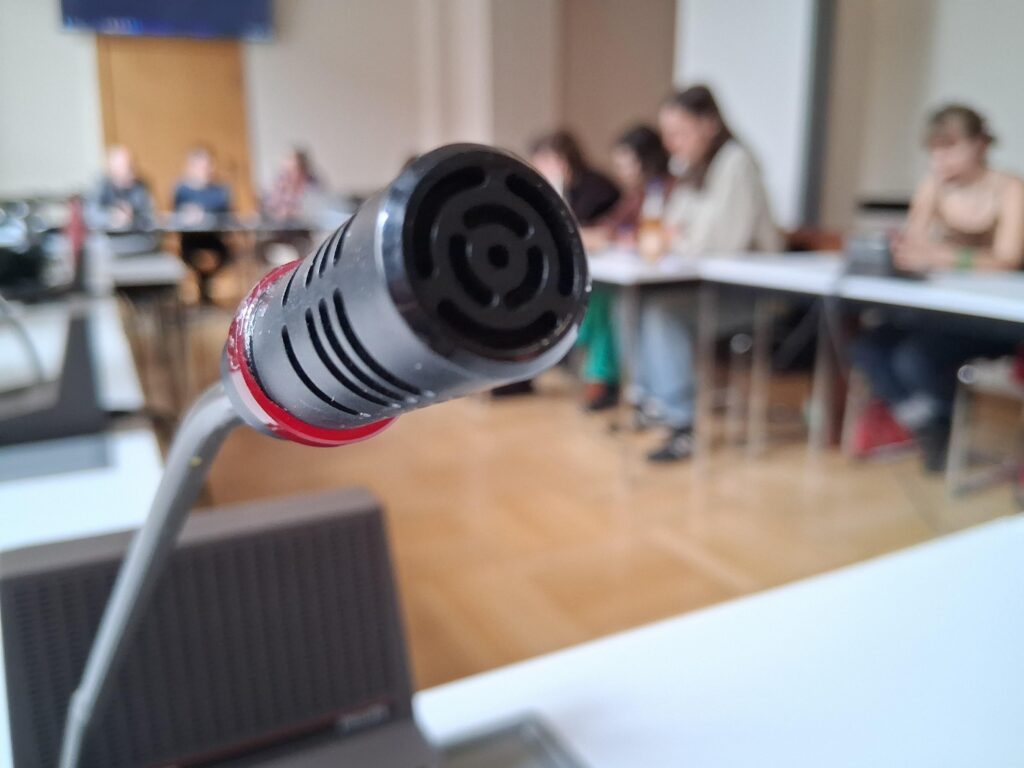
The participants spent a full day at the Berlin House of Representatives. There, they met with representatives Dr. Michael Efler (The Left Party) and Julian Schwarze (The Green Party). The discussions focused on the opportunities available to the current opposition parties should they be part of the government after the autumn election. Both representatives indicated they would consider regulations for large advertising displays.
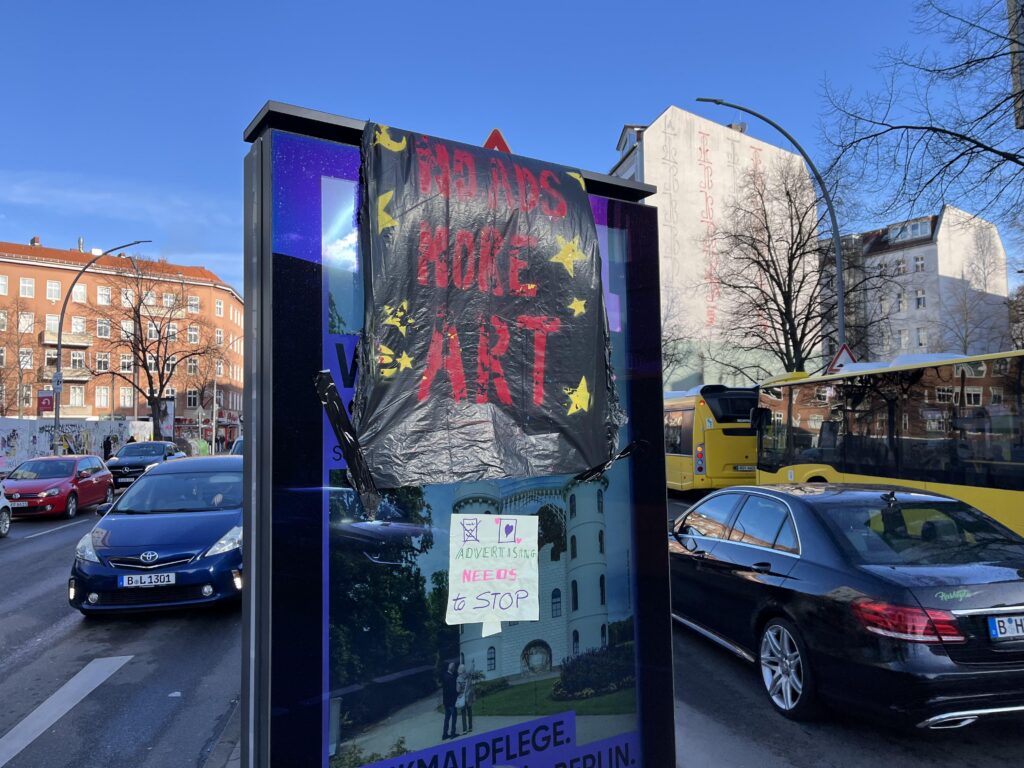
Black Foil Helps
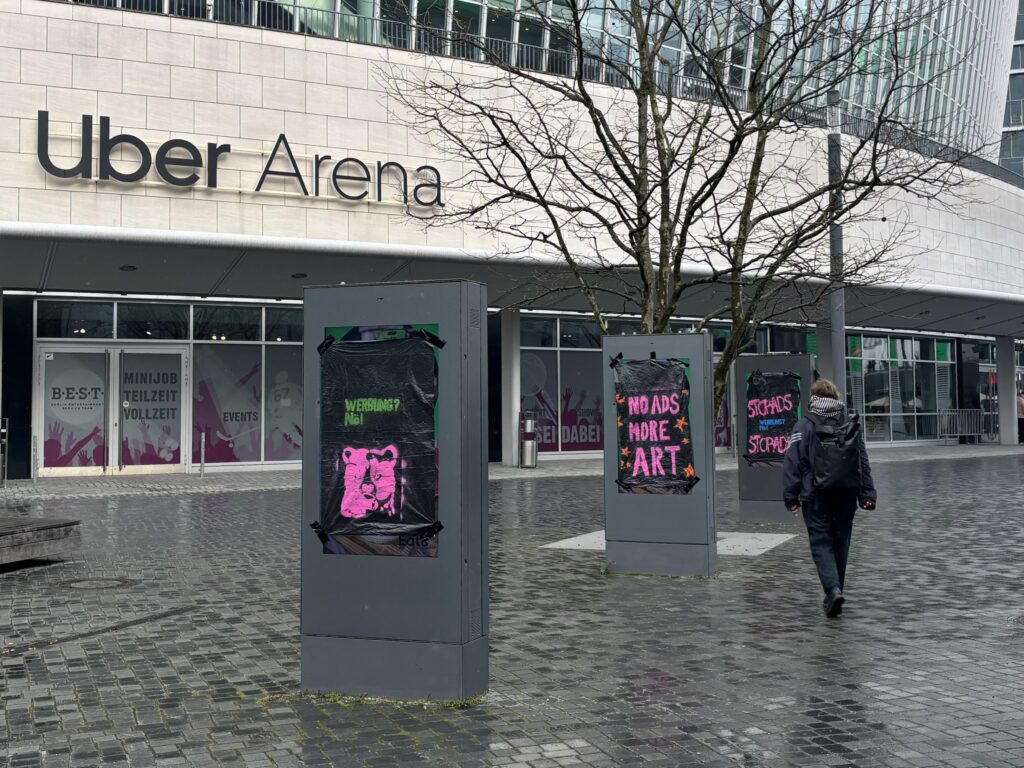
However, self-help is faster than the political process. The intrusive flashing and glowing of the digital advertising displays that are increasingly common on the streets can be stopped surprisingly easily: A large piece of black foil is all it takes. Instead of the advertisements, artistic lettering is now visible on a black background: „No Ads More Art“ and the Berlin Bear of the Berlin Ad-Free Initiative are displayed. „In this way, we have temporarily made the advertising that is otherwise omnipresent in Berlin disappear,“ explains Jerome Bàr.
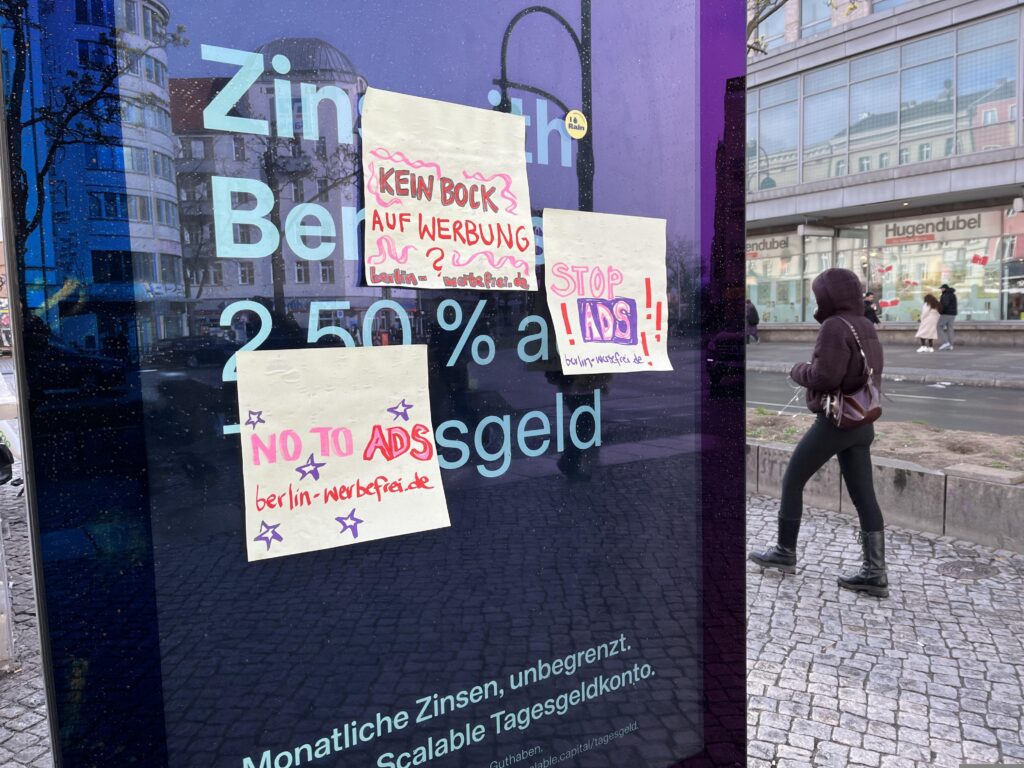
Post-it Notes Instead of Advertising
Sticky notes are also a good option. Like large Post-it notes, these can easily be marked with a short note like „No more advertising!“ and stuck onto advertising displays without causing damage. „Public space should be used collectively and not monopolized by a few companies,“ says Jerome Bàr.
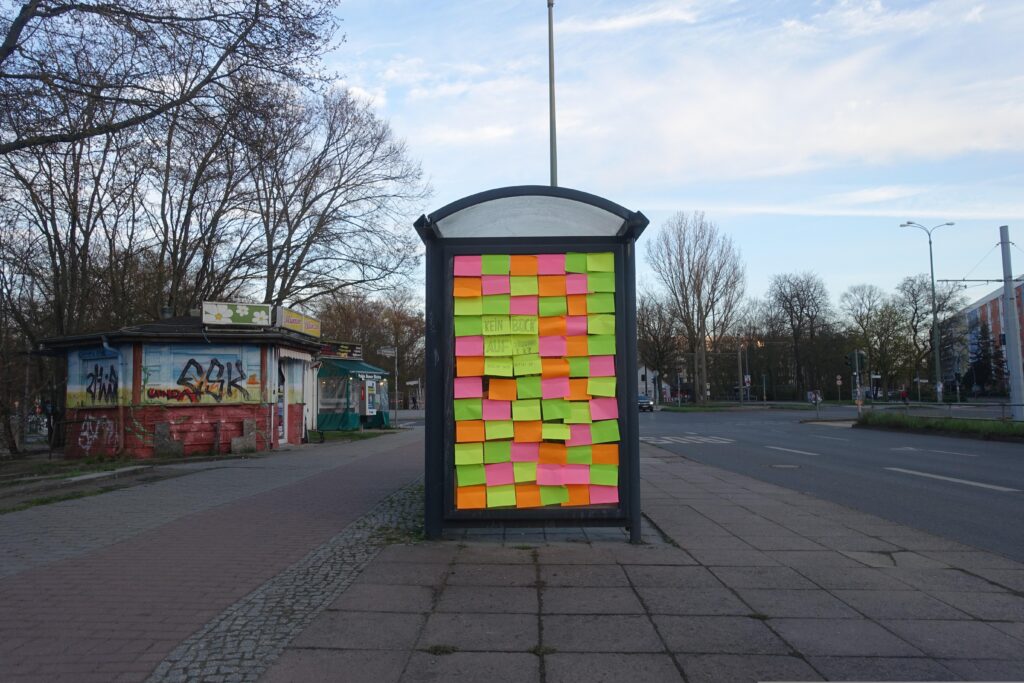
Colorful instead of advertising
Even with colorful sticky notes, advertising can be quickly and easily transformed into a work of art. Simply stick many sticky notes in neat rows on an advertising display case. This is guaranteed to attract the attention of passersby.
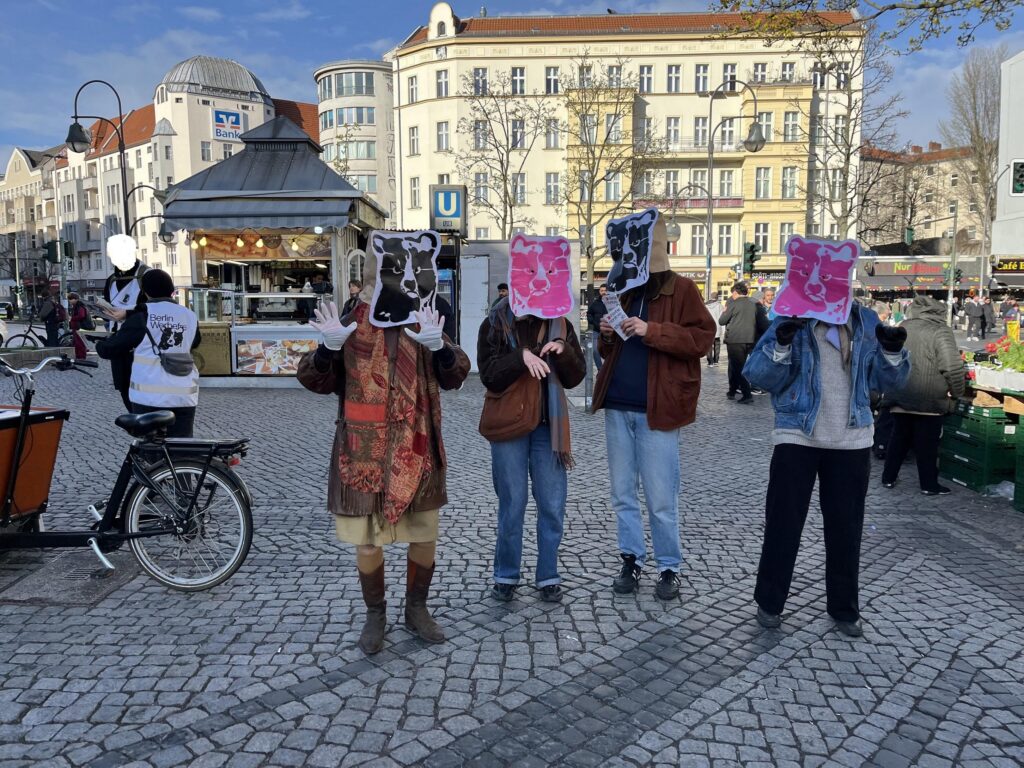
Generated Massive Interest
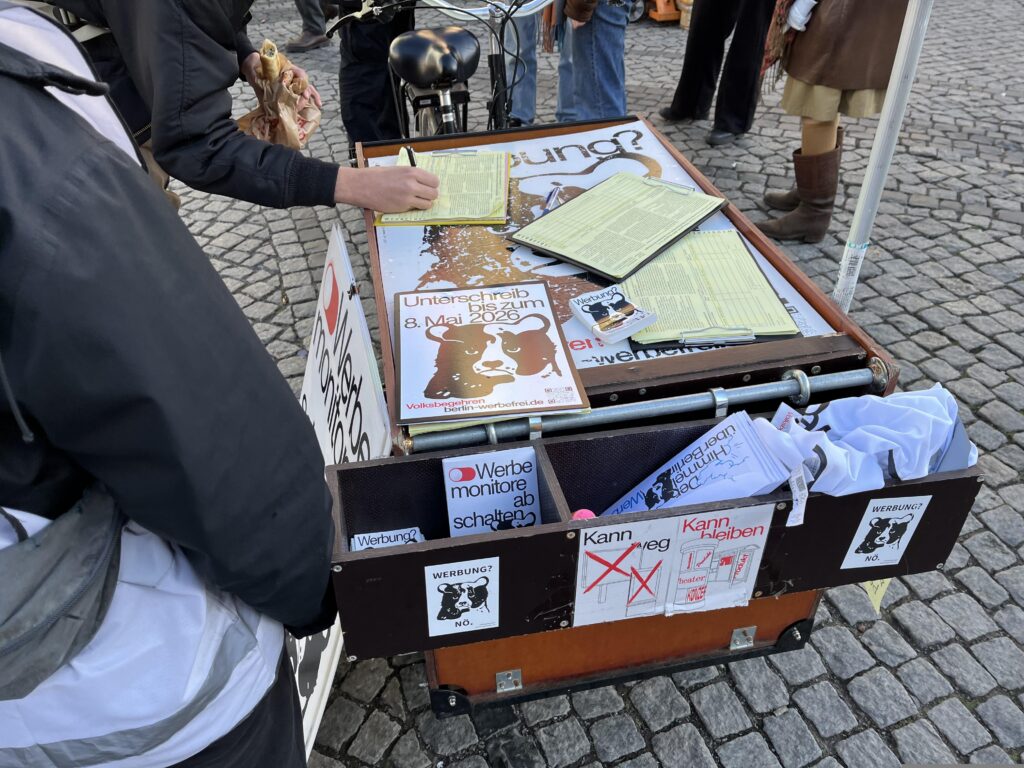
The sticky notes and covered advertising displays attracted considerable attention at Hermannplatz. Activists used this opportunity to talk to passersby and collect signatures for the petition of Berlin Werbefrei: „Our bear masks also helped with the collection,“ explains Jerome Bàr. „They generated a lot of interest.“
Custom Posters in Advertising Displays
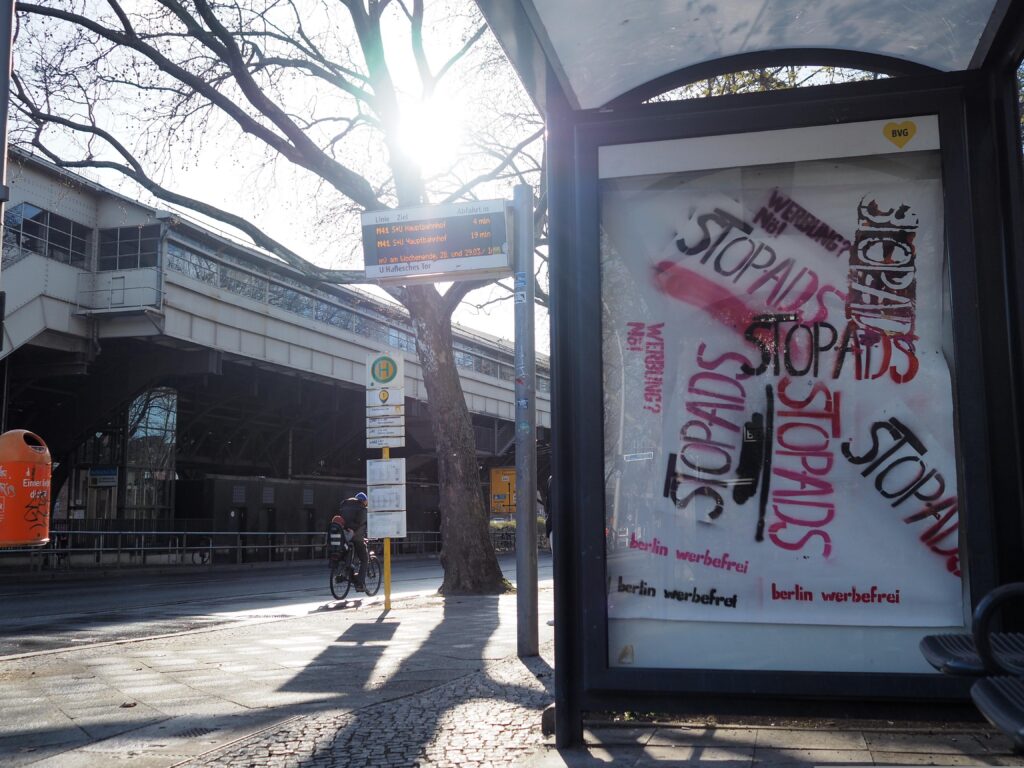
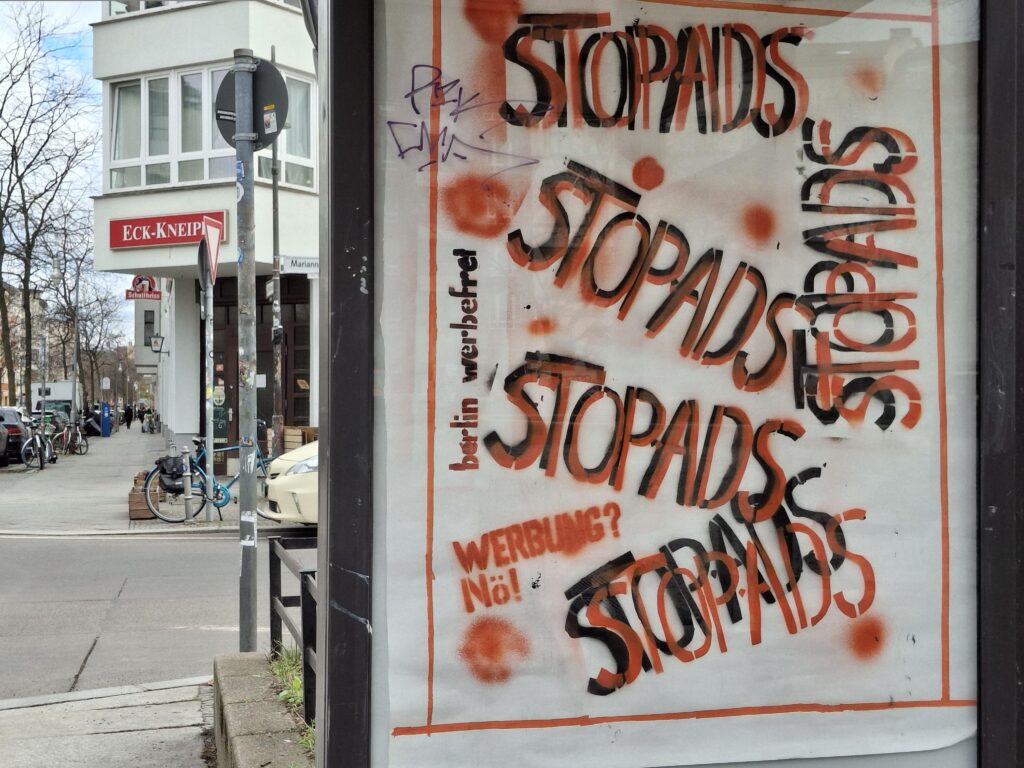
Some activists participating in the bi-national meeting also tried hijacking advertising displays. This can be done with standard socket wrenches from a hardware store and is not illegal. They also placed their own posters, made with stencils, in the display cases. They were careful not to erect any posters themselves. This is also legal, as legal scholar Prof. Dr. Mohamad El-Ghazi from the University of Trier explains in his podcast:
https://das-letzte-wort.buzzsprout.com/1122260/episodes/5406019-episode-9-adbusting
Binational Cooperation
The binational networking meeting was organized by the Paris-based organization Résistance à l’Agression Publicitaire (RAP) and the Association for Networking and Participation (VVP) from Berlin. RAP has existed for more than 30 years. The organization uses lobbying and civil disobedience, working with grassroots groups throughout France, to campaign for advertising bans. The Association for Networking and Participation (Verein für Vernetzung und Partizipation e. V.) has existed since 2020 and focuses primarily on youth participation.
Advertising surrounds us: constantly, everywhere.
At a time when issues of social and environmental justice have never received so much attention in public debate, the number of advertisements and the space they occupy in our field of vision are steadily increasing. At breakfast between segments of the morning radio program, in subway stations on the way to work, on social media and before opening certain smartphone apps, via promotional emails in our inboxes, as product placements in episodes of our current favorite series… The various forms of advertising intrude openly or more subtly into our everyday lives.
Harmful Consequences
Numerous studies show that advertising has many harmful consequences, even if they are not immediately apparent. A digital advertising display, for example, consumes as much energy as 10 single-person households. Further environmental damage is caused by encouraging excessive consumption. Advertising also negatively impacts public physical and mental health, for example, through advertising for highly processed, sugary, or fatty products.
Measures taken by several European cities
In light of the impact of advertising on people in public spaces, several European cities have already taken action. For example, Grenoble (France) has banned almost all forms of commercial advertising for about ten years. Only cultural, club-related, or artistic posters are permitted. The city of Amsterdam (Netherlands) recently banned advertising for meat and fossil fuels. „In Berlin, on the other hand, billboards and screens are springing up like mushrooms in the city streets,“ says Jerome Bàr. „The city administration must finally take measures to regulate advertising.“
Sign the petition!
The current „Berlin Ad-Free“ petition is collecting signatures from eligible voters for a significant reduction in advertising in public spaces. Digital and giant displays should disappear entirely, and advertising on public transport should be significantly reduced in both number and format. People can still sign until May 8: https://berlin-werbefrei.de/
More information:
Youth participation project „Whose streets? Our streets?“:
https://vernetzungpartizipation.noblogs.org/post/category/whose-streets-our-streets/
Résistance à l’Agression Publicitaire (RAP) from Paris:
https://antipub.org/
Berlin Ad-Free Referendum:
https://berlin-werbefrei.de/
The event is funded by the European Union as a youth participation project under the Erasmus+ program.

This project is funded by the European Union. The content reflects solely the opinions of the authors. The EU Commission and Youth for Europe are not liable for any consequences arising from its reuse.